What You Should Know Before Trying Kettlebells

Monday, August 15, 2011 0 comments

Everyone these days seems to be incorporating kettlebells into her workouts. Vanessa Hudgens uses them to stay strong, and Penelope Cruz, Jennifer Lopez and Matthew McConaughey have also worked out with them. While most everyone can do a kettlebell workout, there's a few things that every kettlebell beginner should know before trying this new hot trend.

1. Form is king. Before trying any kettlebell workout, it's important to know and understand proper form. Take a kettlebell class with an experienced and certified instructor and ask for one-on-one help. A kettlebell workout is very challenging and can be fantastic for building strength, but if you're not doing the moves properly, you can be injured or not see results.

Related: 20 Ways to Get Toned Arms Faster

2. It's all about momentum.
 Kettlebell workouts are all about explosive, powerful movements. Unlike lifting weights where you slowly lift a weight, when working out with kettlebells, it's all about using the momentum of the movement to lift the kettlebell. This combination of strength and movement gives you both a weight-lifting and cardio workout in one!

Related: Losing Weight and Not Feeling Great? Here's Why

3. Go heavy or go home.
 Heavy kettlebells are the name of the game when it comes to kettlebell workouts. Because you're using momentum, you can lift a much heavier weight than you're used to, so don't be afraid — after you have your form down, of course— to pick up the heavier kettlebell.

Pantry Raid: 11 Healthy Food Swaps to Make

0 comments

By: Amanda Pressner

Can't remember the last time you cleaned out your cupboards? It's time to start fresh. Here, 11 simple food swaps that will spice up your meals and cut calories and fat.

Related: 6 Dishes That Slash 1,000 Calories Off Your Meal

Flour & Oils

Stock up on: Whole wheat flour
Toss: Half the 5-pound bag of white flour

An easy way to get more fiber in your diet is to substitute whole wheat flour for up to half the white flour in recipes. "Each quarter cup will add an additional 3 grams of fiber to the dish, but you won't taste the difference," says Tanya Zuckerbrot, RD, author of The F-Factor Diet . And since it makes cookies, cakes, and breads denser, you will feel fuller and be less likely to reach for seconds.

Store It Right
Freeze your flour. Whole-grain flour has a shorter shelf life than refined versions because the essential fatty acids it contains cause it to spoil faster, says Brown. To keep it for up to six months, store whole-grain flour in the freezer. You don't have to thaw it before using; the fatty acids prevent the flour from hardening.

Stock up on: Canola and olive oils
Toss: Vegetable oil

Canola oil is a great source of heart-healthy omega-3 fatty acids. "It has a mild flavor and a high smoking point, so it's ideal for sauteing and stir-frying," says Natalia Hancock, a culinary nutritionist for Rouge Tomate restaurant in New York City. When making salad dressing, cold dips, or spreads, reach for olive oil. It's an excellent source of oleic acid, a type of monounsaturated fat, which research shows suppresses hunger.

Related: Calculate How Many Calories You Need

Better Broth & Noodles

Stock up on: Low-sodium chicken or vegetable broth
Toss: High-sodium broth

Cooking side dishes with broth is a great way to amp up the flavor without adding a lot of fat or calories. But one cup of the regular stuff contains up to 40 percent of your recommended daily sodium intake. Choose broths that are lower in sodium -- 450 milligrams per serving or less -- and use them in mashed potatoes instead of butter or half-and-half; you'll save about 230 calories and 24 grams of fat per batch, says Jessica Fishman Levinson, RD, a nutritionist in New York City. Or swap butter or olive oil for broth in rice recipes and cut up to 36 calories and 5 to 6 grams of fat per serving. Broth also adds zing to steamed veggies. Just sub it for water and cook as usual.

Stock up on: Buckwheat noodles
Toss: Refined pasta

Trading up from white pasta to whole wheat is good, but choosing soba, made with buckwheat, is even better. These noodles are high in fiber (3 grams per 2 ounces), and they're an excellent source of plant protein (about 8 grams per cup cooked). "Buckwheat noodles are so filling and satisfying, you're less likely to eat oversize portions," says Zuckerbrot. They're also loaded with magnesium; choline, a mineral that helps keep your brain healthy; and antioxidants, including rutin, which may lower blood pressure.

Related: 8 Healthier Pasta Sauce Choices

Whole Grains

Stock up on: Hearty whole grains
Toss: White rice

During processing, white rice is stripped of up to 90 percent of its B vitamins, 60 percent of its iron, and most of its fiber and essential fatty acids, Zuckerbrot says. Eating whole grains will provide you with as much as 8 grams of fiber per serving and can reduce your risk for heart disease by roughly 20 percent. Bust out of the brown rice rut with bulgur, wheat berries, and farro. Cook these grains as you would rice (simmer, covered, over low heat) and add them to soups, salads, and stir-fries.

Store It Right
Make a clean sweep. Wipe or rinse cans, jars, and bottles to reduce the chance of harmful bacteria sneaking into your food. (Only about one-third of us do so, according to Joan Salge Blake, RD, professor of nutrition at Boston University.) If a can has dents, cracks, or a bulging lid, throw it out.

Related: 13 Easy Quinoa Recipes to Try Tonight

Bread Crumbs & Salsa

Stock up on: Panko bread crumbs
Toss: Regular bread crumbs

Not only do they contain half the calories of the Italian kind -- 110 versus 220 per half cup -- but "because panko bread crumbs are lighter and coarser, they tend to absorb less oil and fat," Levinson says. They also stay crisper after cooking,making them perfect for breaded chicken, meat, and fish dishes. Plus, panko has about one-tenth the sodium of many regular bread crumbs.

Stock up on: Salsa verde
Toss: Ranch- and onion-dip mixes

Each half-cup portion of this salsa contains just 60 calories and counts as a serving of vegetables. It's made with green tomatillos, a great plant source of the B vitamin niacin, which helps keep your cholesterol low.

Related: Make Dinner Fun: Kid-Friendly Recipes

Healthier Chocolate, Artichoke Hearts

Stock up on: Cocoa powder
Toss: Chocolate chips

Sweet treats don't have to be off-limits, even if you're on a diet. Instead of high-calorie, high-fat chocolate chips (a half cup has 560 calories and 32 grams of fat), add 3 tablespoons of cocoa powder to cookie, cake, or muffin batter before baking. Voila, the chocolaty flavor you crave for just 37 calories and 2 grams of fat.

Stock up on: Artichoke hearts
Toss: Green olives

Eat just four olives and you've consumed about 2 grams of fat. Artichoke hearts give you a hint of the same salty flavor with zero fat. Ounce for ounce, they contain more antioxidants than any other vegetable (and about 50 percent more than blueberries). They can taste briny straight from the can, so rinse first. Put them in salads and stews and on pizzas, says Jody Adams, chef and owner of Rialto Restaurant in Cambridge, Massachusetts. Or add artichokes to a fresh tomato sauce and serve over pasta.

Related: Our Favorite Guilt-Free Ways to Eat Chocolate

Beans & Tuna

Stock up on: Dried beans
Toss: Canned beans

Canned beans are convenient, but they can cost twice as much per pound as the dried kind and have 50 times the sodium. Soak dried beans in water overnight, drain them in the a.m., and freeze what you don't use. They'll last up to six months, and no defrosting is required, says Leanne Ely, author of the Saving Dinner cookbook series. A 1-pound bag of beans yields 5 to 6 cups cooked.

Stock up on: Chunk light tuna packets
Toss: Canned albacore tuna

The chunk light variety has all the nutrients and protein that fancier white-meat tuna does but about one-third the amount of mercury. Don't like the darker meat? Opt for brands of albacore that use troll- or pole-and-line-caught fish, like Wild Planet, suggests Elizabeth Brown, RD, a nutritionist in Houston. These fish are much younger and smaller, which means they've had less time to accumulate the harmful heavy metal.

5 Decadent Snacks That are Healthier Than You Think

0 comments

By Meaghan Cameron

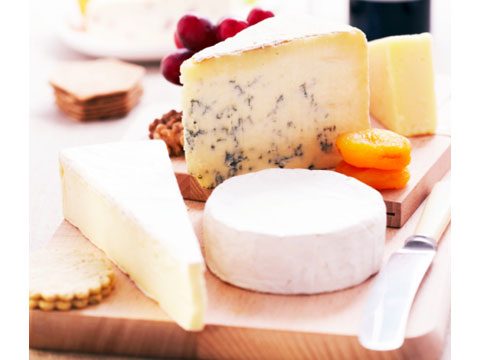
Full-fat Cheese
Alan Aragon, the Men's Health Weight-Loss Coach, says his clients actually see a reduction in appetite when they mindfully eat flavorful varieties of cheese. The protein/fat combo plus truly unique flavors and an endless array of choices could really make full-fat cheese a dieter's best friend. Yes, seriously!

Chocolate
Here's more proof that Nature is perfect in her splendor:Chocolate may improve your workout. A study revealed that feeding chocolate to mice resulted in 50% greater stamina and greater muscle growth. Keep a few dark chocolate squares on hand pre-workout.

Roasted Peanuts
Eat some roasted peanuts the next time you are at the ballpark and skip the nitrate-loaded hot dog. The journal Food Chemistry discovered that well roasted peanuts are higher in antioxidants. However, as far as we know no study has showed similar results for Cracker Jacks or cotton candy.

Chocolate Milk

Even as schools in Los Angeles are banishing chocolate milk from their menus, Men's Health is touting its ability to build muscle and aid in workout recovery. The combination of protein, fat, carbs, and micronutrients is perfect for your body. Vitamin D helps shuttle the calcium needed by your body for weight loss into cells. In one study, stationary bike riders were able to pedal 49% longer after drinking chocolate milk versus a sports drink.

Red Wine
This happy hour staple and companion to delicious meals has long been considered relatively healthy in moderation. It contains resveratrol, which lowers cholesterol and protects the blood vessels. Now, a study from the Journal of Agricultural and Food Chemistry draws a correlation between wine and sunburn protection. Researchers found that the flavonoids in wine help protect skin cells from sun damage.

Men Are Living Almost as Long as Women

0 comments

Ever since 1928, when the discovery of penicillin virtually wiped out maternal deaths due to "childbed fever," women have been living longer than men. But that is changing. As short a time ago as 2003, the life expectancy gap was five years. Yet according to a 2011 study from the University of Wisconsin's Institute for Health Metrics and Evaluation, that figure has shrunk to just over two years. A man who is 65 today may well live to the impressive age of 82.3. For a woman of the same age, that number squeaks up to 84.9.

So the guys are catching up to us. This trend is partly due to the advent of Lipitor, bypass surgery, and other medical advances that are helping to keep men from dying early of heart attacks. Yet even as their lifespans are getting longer, ours are not keeping up at our historic pace. Researchers say this is because women are so stressed out these days that they're resorting to unhealthy habits such as skimping on sleep, grabbing fast food, and relying on meds, alcohol, and cigarettes to cope. Ouch! Here's hoping we can learn to mend our ways and stop literally killing ourselves slowly.

See AlsoCaring for Husband May Cut Longevity

Yet even if we do, the fact will remain that the boys are living longer than they once did. Economists, relationship gurus, and other experts are busy batting around theories about what this might mean for our collective future. Still, Susan Jacoby, author of "Never Say Die: The Myth and Marketing of Old Age," sounded a realistic note among the clamor when she pointed out in a recent "New York Times" article that "The skies will not be 'raining men' in old age, particularly among the 'old old' over 85."

True, but there will indeed be more older men than ever before. Will the uptick mean fewer widows along with a bigger playing field of potential matches for women who do become suddenly single? Will the possible increase in the numbers of anniversaries married couples celebrate be a boon or a bane? On the one hand, people may get to grow old together and discover that, in the poet Browning's words, "the best is yet to be." On the other hand, one spouse or the other could end up as a caregiver when he or she is barely able to manage the responsibility. And how about spouses trapped in bad marriages? Studies show that marital strife is detrimental to physical and mental health even in the short run, let alone for an extended sentence. As for the economy, will the relative boom in senior men be a drain on Social Security or will the aging males remain robust enough to keep earning and contributing?

See Also: Lifestyle Changes Key to Longevity

We'd love to have you share how you feel about the reasons the lifespan for women is no longer increasing and also tell us what you think having more men around longer will mean. Will it be good, bad, or doesn't it really matter?  

Busted: Top 10 Myths Related to Heart Problems

0 comments

We at oxygenmag love busting myths. And this time around we'll debunk some myths related to human heart which has always been shrouded in mystery, be it in the Bollywood movies or in real life as vital body organ.

We are constantly swimming in an ocean of heart-related myths. There's a lack of complete and correct knowledge about the heart and people don't really know what's good or bad for their heart.

Let's deflate some heart-related myths right now:

Vegan Diets Are Making You Healthier and Stronger

Myth No. 1: Heart-Attack cannot get you if you're Physically Fit

Being fit may lessen the risk factors but it doesn't guarantee a life exempted from diseases. People often live under the impression that heart diseases mostly affect those who are obese. Even thin or weight conscious people can suffer from clogged arteries resulting from cholesterol deposits or damaged arteries. Factors like diabetes, smoking, tobacco abuse, genetic predisposition, genetics, high cholesterol or hypertension expose you to risk irrespective of your fitness levels.

Low Carb Cooking


Myth No. 2: It's Easy to Recognize the Symptoms of a Heart Attack

Forget ordinary people, a heart attack can even play hide-and-seek with cardiologists. Its symptoms can be varying and may not always be severe. Do not take the following symptoms lightly: Chest pain, shortness of breath, cold sweat, nausea, weakness, unusual fatigue, heaviness, weakness, or pain in one or both arms, back pain, indigestion, racing or fluttering heart. Seek immediate medical attention if you experience these.

Rough diagram of pain zones in myocardial infarction (dark red = most typical area, light red = other possible areas, view of the chest).


Simple Ways to Make the Switch to Organic Foods

Myth No. 3: No Chest Pain Means No Heart Attack

A heart attack can have unusual indicators. Infact at times diabetics may not experience any pain. And it's not necessary that a person only experiences pain in the chest area. Chest pain or discomfort can be anywhere, starting from jaw to the umbilicus (navel aka belly button). The pain is not clearly localised. In fact, it's not even well-defined. It might be some sort of "heaviness" or "tightness" or a feeling of pressure. The chest pain associated with heart attacks is not usually sharp but more often described as dull. It can be lasting or intermittent. Squeezing or unusual discomfort at the back doesn't always mean an attack but the possibility cannot be fully ruled out until the tests are done.

Also, if you feel that you are experiencing an irregular heartbeat or hyperventilating, then don't overlook it as stress related disorder.

Top 5 Fish Soups

Myth No. 4: Wait and Watch the Chest Pain to Subside

The ancient "wait and watch" approach can prove to be lethal in the cases of heart and brain. Immediate medical attention should be sought after if you experience unrecognized, inexplicable chest pain. Every second counts and may cause irreparable damage to the heart. Dismissing chest pain for indigestion or gas is not a wise idea.

A myocardial infarction occurs when an atherosclerotic plaque slowly builds up in the inner lining of a coronary artery and then suddenly ruptures, causing catastrophic thrombus formation, totally occluding the artery and preventing blood flow downstream.


Common Dieting Mistakes

Myth No. 5: Heart Problems do not Affect Young People

This may have been true in ancient times but doesn't really hold any weight in the present times. Cases of people aged between 20 and 40 years getting hit by a heart attack have been widely reported. And the main reason for this? The kind of lifestyle we have developed in the recent years. Junk food, smoking, less exercise, increased intake of alcohol and high levels of stress has become daily lifestyles of most of the urban working population. Add to this, the factors like diabetes, high cholesterol and high blood pressure.

Myth No. 6: Taking an Aspirin in a Day Helps to Subside Heart Attacks

While taking of aspirin tablets is recommended during an active heart attack when someone is having chest pain, it is not recommended for everyday use to prevent heart disease unless specified by your doctor. Aspirin can have some seriously harsh side-effects. Everyday use of aspirin should not be done unless approved by a doctor.

Best Tips For Healthy Eating


Myth No. 7: After a Heart Attack Life Comes to a Halt

Life can be back on track if a person gets conscious about his lifestyle. Don't take an attack as the end of good life. If you become aware of your eating habits, exercise regime, banish smoke and alcohol from you territory and most importantly adopt a positive attitude towards your work then you can be as healthy as you were. Of course, you have to remain under strict medical supervision and follow all the advice dispensed by the doctor.

Myth No. 8: Heart Diseases Affect Men and Women in the Same Way

Men and women, both, suffer from heart disease but men have a higher risk of getting a fatal heart disease than women who are still getting their menstrual period. The conception that women do not suffer from heart attacks in erroneous. It's just that they are less prone to the disease than men and that too in their reproductive age group. By the age of 60-65, a woman is under the same degree of risk as a man. Women also lose much of their protection if they smoke, take oral contraception, are diabetic or hypertensive. While heart attack-related symptoms are almost same in both the sexes, women may also experience vomiting, breathlessness, nausea additionally.

The Healthiest Foods You Can Find

Myth No. 9: Diabetes is Not a Threat as Long as the Blood Sugar Level is under Control

Diabetes itself causes inflammation that can damage blood vessels, raising the risk of heart disease and other health problems. One also needs to take into account his weight, blood pressure and cholesterol levels apart from the blood sugar level.

Myth 10: I've Already Had an Angioplasty (heart surgery) and so I can put all Heart-related worries to Rest

This is definitely untrue. If you go back to same old lifestyle ripe with carelessness that originally allowed you to develop a heart problem then you are quite likely to damage your heart again.

We must understand that heart is a complex organ and needs our attention accordingly. With diet, exercise and greater awareness of risks, most heart diseases are preventable. But sadly enough, people treat their cars better than their bodies.

Weight Loss Tips From Oxygen

User post: I've lost 40 pounds . .

0 comments

6 months ago, I was sitting in my bed. Next to me was 2 cans of soda, tortilla chips with dip, leftovers from the night before and to finish off, ice cream. I was watching the biggest loser, wishing I could lose weight. Feeling awful that I had reached 206lbs. I blamed it all on my recent ACL knee injury, but the truth is..I was fat before that! The day the doctor cleared me as "this is as good as it gets" I got on the treadmill. And so it started. Now look where I'm at!!! WOW.

What to Consider When Choosing a Weight Loss Center

Top 10 Foods That Burn Fat

Tips On How to Lose Belly Fat and Why

I broke through my plateau and this week I'm down 2lbs which means... I'm down 40lbs!!!!!!!!!!!! It doesn't seem real to me sometimes! I'm not avoiding mirrors, cameras or clothing stores anymore. Bring em ALL on!

I recently changed my goal weight from 150 to 140lbs, I'm 5'1 and I know that I'd still be "overweight". I think I set 150 because I didn't think I could do it. But now I KNOW that I can do this.

Should You Join an Online Weight Loss Program?

Super Foods for Super Weight Loss
 

Motivation to Lose Weight
 

What may not seem much weight to many, feels like tons to me. I physically and mentally feel SO much better. I chose to live healthy now, and I'm never going to quit. Sure, I've had hard days..becoming healthier isn't the easiest thing for us. But guess what, I did it anyway!! Days where I didn't feel like doing a thing, I was sore or tired..I got my butt moving and did it!!

*For some reason, I ended up taking progress photos in my "Pepsi" shirt, it so happened I had a before picture. So I took a picture in my Pepsi shirt of 20lbs lost (in my photo album) and now this is my Pepsi picture of 40lbs lost!

 
My Fitness For You © 2011 | Designed by Interline Cruises, in collaboration with Interline Discounts, Travel Tips and Movie Tickets